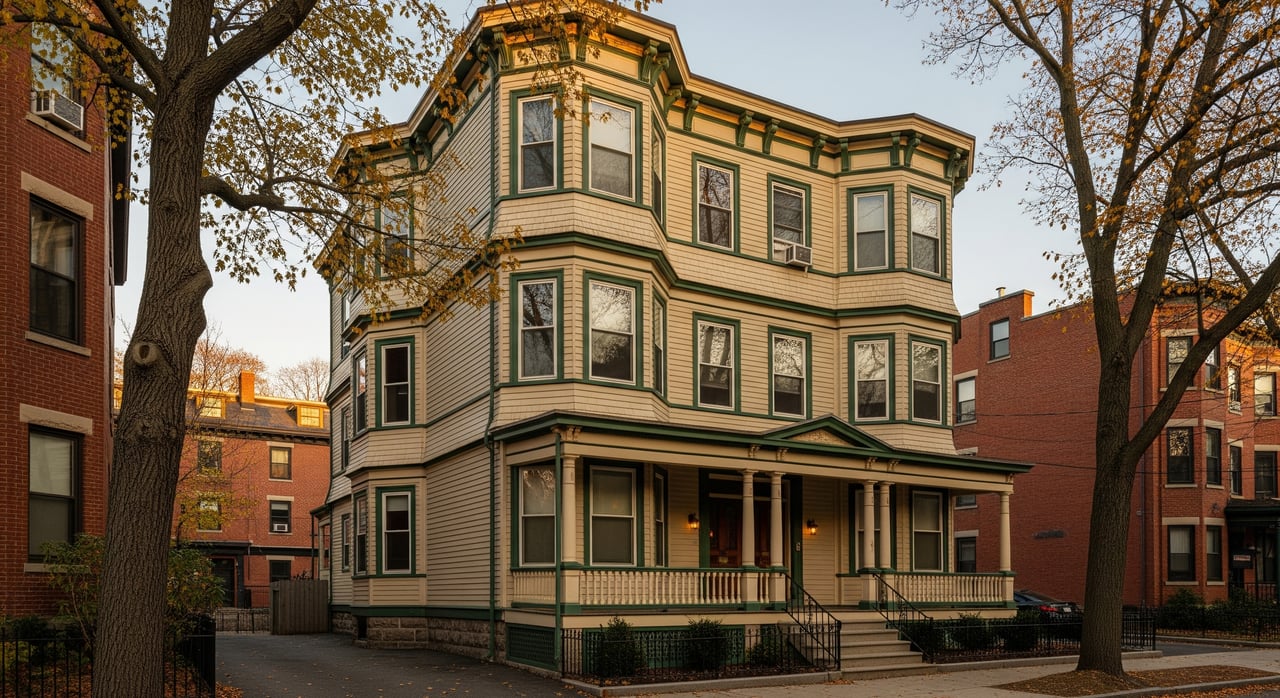
Ever drive past a Worcester three‑family with stacked porches and wonder what it is? You’re looking at a classic New England triple‑decker. If you’re exploring a house‑hack or building a small portfolio, understanding this housing type gives you a real edge. In this guide, you’ll learn what defines a triple‑decker, how units are laid out, what rehab typically costs, and the rules to know in Worcester. Let’s dive in.
Triple‑decker, defined
A triple‑decker is a three‑story, wood‑frame apartment building with one dwelling unit per floor under one roof. Most were built from the late 1800s through the 1930s for mill and factory workers in New England mill towns, including Worcester. They’re a key part of the city’s historic housing stock and an ongoing source of attainable rentals.
These buildings usually feature light‑frame construction, masonry or concrete foundations, and signature stacked front porches. Many have been updated over time with modern heating, electrical, and plumbing systems.
Worcester context
Triple‑deckers are common in older, denser Worcester neighborhoods, often near former streetcar lines and historic industrial corridors. They remain part of the city’s rental supply and heritage, offering three homes on a small lot footprint. For city resources on housing, permitting, and inspections, start with the City of Worcester official site.
Typical layouts and sizes
Most triple‑deckers have one apartment per floor. A typical floor plan includes a living room, dining room, kitchen, 2–3 bedrooms, and 1 bathroom. Plumbing often stacks vertically, so kitchens and bathrooms line up from floor to floor.
Unit sizes vary, but many fall in the range of roughly 700–1,200 square feet per floor. Some owners enclose porches or reconfigure rooms, so you’ll see a wide mix from smaller worker flats to larger, updated apartments.
Common interior features include original wood trim, wood floors under old carpet, narrow stairs, and plaster walls. Upper‑floor access is usually by stairs, so full accessibility is uncommon unless a major renovation was done.
Why investors and house‑hackers like them
Triple‑deckers let you live in one unit and rent the other two. That rental income can offset a large portion of your housing cost while you build equity. You also concentrate management in one location instead of spreading effort over separate single‑family rentals.
Demand drivers in Worcester include proximity to colleges, hospitals, major employers, and downtown amenities. Vacancies in one unit hurt less than a full vacancy would in a single‑family home because other units can still generate income.
Financing options to explore
Owner‑occupants can look at 2–4 unit mortgage products. FHA financing allows qualified buyers to purchase 2–4 unit properties with lower down payments, and FHA 203(k) can bundle purchase plus renovation. Learn more at HUD and explore local programs at MassHousing.
Investors and repeat buyers often use conventional 2–4 unit loans. Underwriting can differ for 3–4 unit properties, and appraisals may use an income approach. Talk with a local lender about reserves, rental income treatment, and renovation financing.
Rehab scope and cost ranges
Older triple‑deckers often have deferred maintenance. A smart plan starts with safety and code, then systems, then interiors. Here is a practical order of operations:
Priority rehab checklist
- Safety and code: smoke/CO detectors, egress, stair and handrail safety, and Massachusetts code compliance.
- Mechanical systems: boilers or heating systems, water heaters, and oil‑to‑gas conversions where feasible.
- Electrical: upgrade to modern service and panels sized for today’s loads.
- Plumbing: replace failing galvanized lines and rework stacks as needed.
- Exterior envelope: roof, gutters, flashing, foundation repair, and porch structural work.
- Energy upgrades: insulation, air sealing, and window repair or replacement where appropriate.
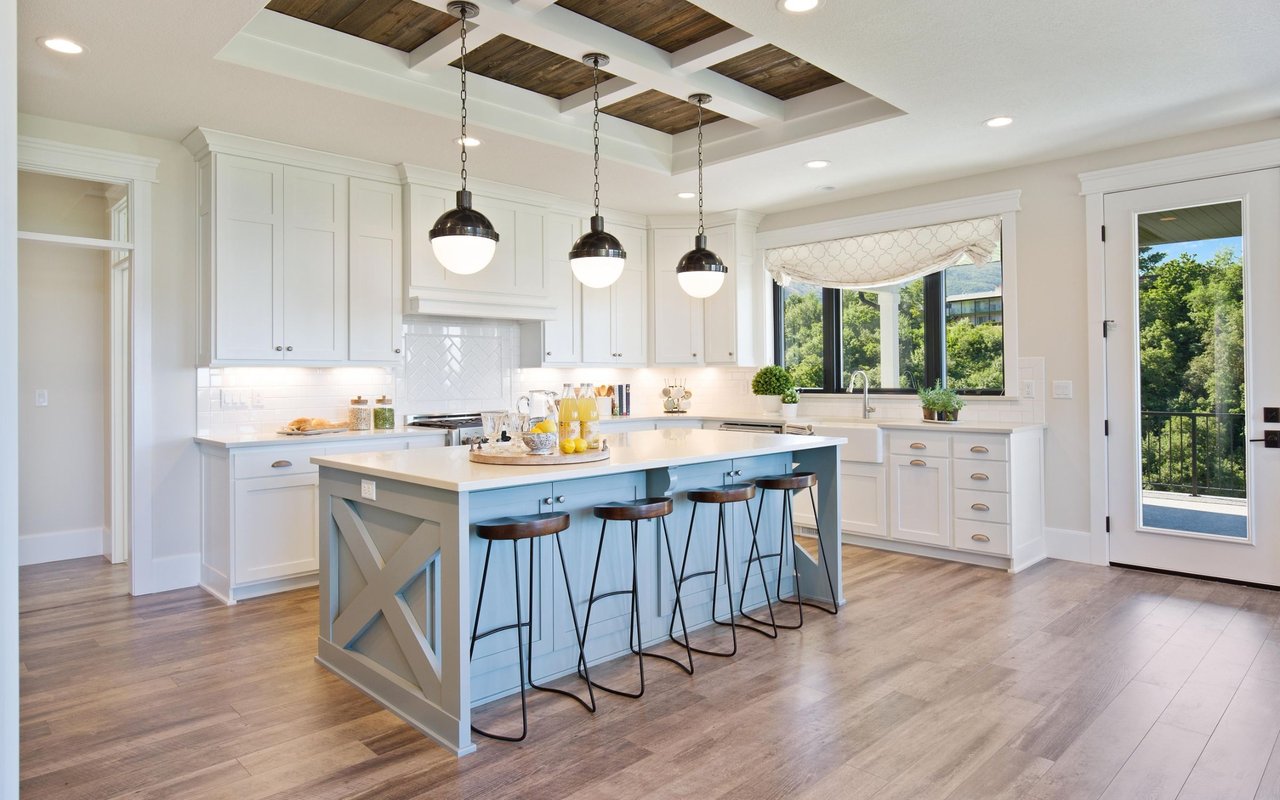
- Unit interiors: kitchens, baths, flooring, paint, and layout tweaks.
- Environmental: plan for lead and asbestos remediation in pre‑1978 buildings.
Cost buckets to expect
- Light cosmetic refresh: about $10k–$30k per unit.
- Moderate rehab: roughly $30k–$80k per unit for new kitchens/baths and system upgrades.
- Full gut: commonly $80k–$150k+ per unit for full reconfiguration and major systems.
Project‑level items like a new roof, foundation work, or major porch rebuilds add to per‑unit costs. Always get multiple local bids and factor in Worcester permitting and inspection timelines.
Operating in Worcester: what to know
- Utilities: Many older buildings still have shared systems. Separating gas and electric meters can simplify operations, but it requires coordination and capital. For utility service and meter information, see National Grid Massachusetts.
- Rents: Rents vary by neighborhood, unit condition, and proximity to jobs and transit. Check current listings and monthly reports to set realistic pro formas. For broad demographic context, use U.S. Census QuickFacts.
- Permits and inspections: Structural, electrical, plumbing, and mechanical work require permits and inspections. Review current processes with City of Worcester Inspectional Services.
- Rental rules: Cities often have rental registration or inspection programs. Confirm Worcester’s current requirements and timelines on the City of Worcester site.
- Safety and compliance: Massachusetts has specific rules for smoke and carbon monoxide alarms, landlord‑tenant obligations, and lead safety. Start with Mass.gov for state requirements and use the EPA lead page for federal renovation rules.
Due diligence before you buy
A little preparation goes a long way. Use these quick checklists to avoid surprises.
Questions to ask on inspection
- What is the electrical service size and panel condition for each unit?
- How old are the heating systems and water heaters, and what fuel is used?
- Are porches, stairs, and handrails structurally sound and code‑compliant?
- Is there any evidence of lead paint or asbestos that could affect rehab scope?
- What is the roof age, and are there signs of leaks, flashing failure, or gutter issues?
- Do the foundation and sills show moisture, cracks, or movement?
Documents to request before making an offer
- Recent utility bills, service history, and any evidence of separate meters.
- Current rent roll, leases, and security deposit records if occupied.
- Permits pulled and final inspection sign‑offs for any past work.
- Assessor records and any prior inspection reports from the city.
- Contractor estimates or scopes of work if rehab has been planned.
How Adam helps you win the deal
If you want a triple‑decker to live in and rent or to add to your portfolio, you need clear numbers, a realistic rehab plan, and confident execution. That is where a vertically integrated approach helps. You get acquisition advice, accurate capex scoping, renovation management, and ongoing property management under one roof.
If you are ready to evaluate a Worcester triple‑decker, connect with Adam Duffy for a free property valuation and an investment plan tailored to your goals.
FAQs
What is a Worcester triple‑decker and why does it matter?
- A triple‑decker is a three‑story, wood‑frame building with one unit per floor, common in Worcester’s historic housing and valued for rental income potential.
How big are units in Worcester triple‑deckers?
- Many units run about 700–1,200 square feet with 2–3 bedrooms and 1 bath, though layouts and sizes vary by building and renovations.
Can I live in one unit and rent the others in Worcester?
- Yes, this house‑hack is common, and owner‑occupied 2–4 unit loans can support it if you meet HUD or lender requirements.
What permits do I need to renovate a triple‑decker in Worcester?
- Structural, electrical, plumbing, gas, and mechanical work require permits and inspections; confirm current steps with the City of Worcester.
How much does a triple‑decker rehab cost in Worcester?
- Light refreshes often run $10k–$30k per unit, moderate $30k–$80k, and full gut $80k–$150k+ per unit, plus any building‑level projects.
Do I need to separate utilities for each unit?
- Not required by default, but separate meters can simplify management and tenant billing; check feasibility and costs with National Grid Massachusetts.